
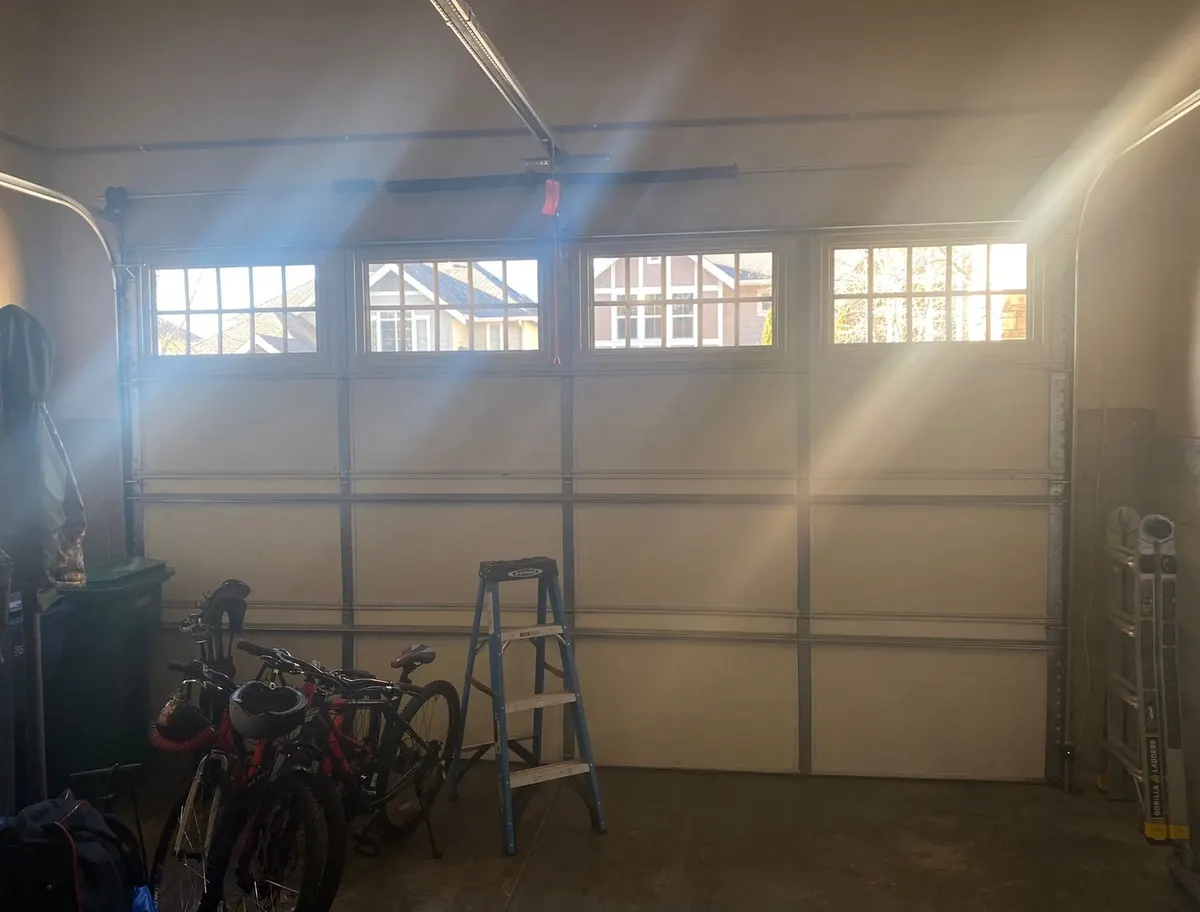
What a Technician Sees on This Call
The pattern is almost always the same. A homeowner presses the opener remote and nothing happens, or the door only rises a few inches before the opener motor groans and stalls. Sometimes there was a loud bang the night before that everyone assumed was a car door or the dust storm rattling the fence. By the time we arrive, the torsion spring above the door is sitting with a visible gap in the coil, or one of the two extension springs along the upper tracks has gone slack. The door itself is usually heavier than it has any right to be, and lifting it by hand takes real effort because the spring that was supposed to counterbalance the weight has already quit doing its job.
Springs rarely fail without warning. They wear down over months, and the dry heat, dust, and temperature swings here accelerate that wear. The good news is that a homeowner can catch most of this early with a five-minute visual and functional check.
The Garage Floor Checklist
1. Look at the coil spacing on a torsion spring
A torsion spring sits horizontally above the door on a shaft. New coils sit tight together with even spacing. If you see a noticeable gap between coils, or the coils look stretched apart in one section, the spring has lost tension and is close to failing. This gap often shows up first after a hot summer baked the lubricant out of the coil.
2. Check for rust, flaking, or pitting
Run your eyes (not your hand) along the length of the spring. Surface rust or flaking metal weakens the coil from the outside in. Desert air is dry, but monsoon downpours followed by intense UV and heat create exactly the rust-then-bake cycle that eats away at spring coating faster than people expect.
3. Compare extension spring length to its resting state
If your door uses extension springs stretched along the horizontal tracks instead of a torsion spring overhead, check whether the spring looks stretched out even when the door is fully closed. A healthy extension spring has slack coils when at rest; a worn one stays elongated and loses its snap-back.
4. Disconnect the opener and lift the door by hand
Pull the manual release cord and lift the door yourself. It should rise with moderate, even effort and stay roughly where you stop it. If it feels like dead weight, slams back down, or takes real muscle to get past knee height, the spring is no longer carrying its share of the load.
5. Run the balance test
With the door open about halfway, let go. A balanced door with healthy springs stays in place or drifts down slowly. A door that drops fast or shoots upward on its own means the spring tension is badly off, either from wear or a spring that was sized or adjusted incorrectly.
6. Watch the opener's behavior on a normal open cycle
Listen for grinding, a delayed start, or the motor laboring before the door even clears the floor. An opener working overtime to compensate for a weak spring burns out faster, and in our climate, openers already run hot enough without added strain.
7. Check for uneven lift at the corners
If one side of the door rises faster than the other, or the door tilts visibly as it opens, a torsion spring (or one of a pair) is likely unwinding unevenly. This also puts uneven stress on the cables and rollers.
8. Inspect the cables near the bottom brackets
Fraying or birdcage-shaped strands on the lift cables often show up alongside a weakening spring, since the cable takes on more sudden load as the spring loses tension. Cable failure combined with a spring failure is a far more dangerous event than either alone.
Why This Matters Here
Intense sun dries out factory lubricant and coatings faster than mild climates, monsoon dust works its way into coil gaps, and cool desert nights make metal contract and flex with daily temperature swings. All of that adds up to springs that age faster than their rated cycle count suggests, especially on doors that haven't had lubrication or inspection in a year or more.
When to Call Las Vegas Garage Door
If two or more of these signs show up, don't wait for the bang. Call us for Spring Replacement before the spring lets go on its own, which can damage cables, rollers, or the door panel itself. If you want to get ahead of it entirely, our Preventive Maintenance visits check coil condition, balance, and cable wear before problems start. And if a spring already snapped and the door is stuck, our Emergency Garage Door Service handles same day garage door repair across the Las Vegas valley.
Run through this checklist today, and if anything looks off, call Las Vegas Garage Door for fast, honest service anywhere from Henderson to Summerlin to Pahrump.