
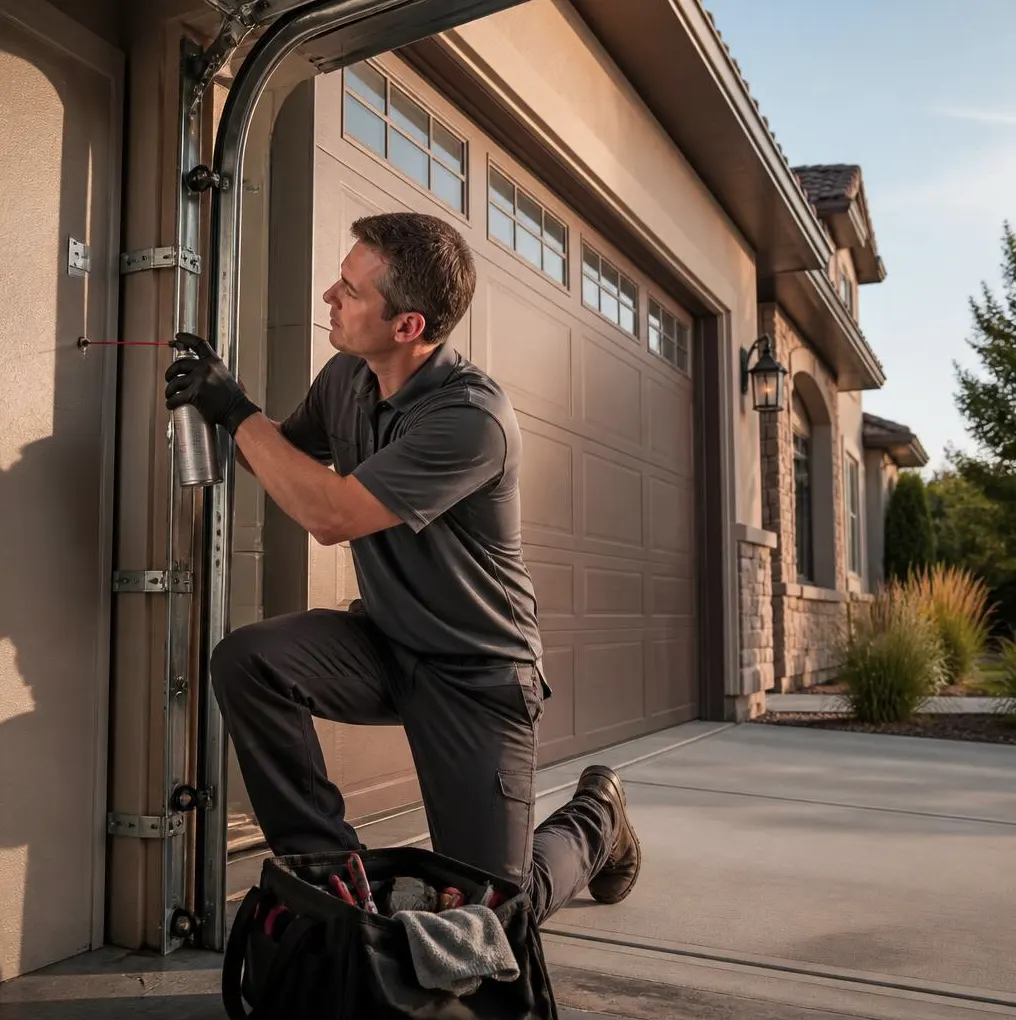
Ignore a rust spot or a swollen bottom panel through one more cool season and you're not looking at a quick fix anymore—you're looking at a door that sticks, hardware that snaps under load, or a full panel replacement running several hundred to over a thousand dollars depending on the door. A tube of touch-up primer and twenty minutes now is cheaper than almost anything that happens later.
"It's the Desert, Why Would We Have Rust?"
This is the argument. One of you thinks moisture damage is a rainy-climate problem that doesn't apply out here. The other one noticed a reddish-brown bloom spreading along the bottom corner of the door and wants to deal with it. The second person is right, and here's why it happens even in a place known for dry heat.
Monsoon season brings sudden, hard rain that hits a door baked all summer by UV and heat—water pools at the bottom track and bottom corners where it has nowhere to drain quickly. Sprinklers aimed even slightly wrong spray the same few inches of door or hardware every single day, which is worse than one storm. And the huge swing between hot afternoons and cool desert nights creates condensation on metal surfaces, especially inside a garage that isn't well ventilated. None of that requires a humid climate. It just requires water meeting metal or wood repeatedly, with no chance to fully dry before it happens again.
What to Actually Look For
Walk out to the garage and check these spots before settling the argument either way:
- Bottom corners and the bottom panel seam — this is where rust shows up first, since it's closest to standing water, sprinkler spray, and splashback from rain.
- Track bolts, hinges, and rollers — surface rust here isn't just cosmetic; it stiffens movement and can lead to a roller seizing in its track.
- Wood or composite panels — look for swelling, bubbling paint, or a slightly spongy feel when you press on the panel. Wood doors absorb water at the edges and swell before you see any obvious rot.
- Musty smell in the garage — often means moisture is sitting somewhere it shouldn't, sometimes behind the door skin itself.
- Flaking or peeling paint — once the protective layer is gone, bare metal underneath starts rusting fast, especially after it's been hit with UV all summer.
Steel vs. Wood: Different Damage, Same Root Cause
Steel doors rust from the outside in, usually starting at the bottom edge where water collects and the factory coating is thinnest. Once rust breaks through the paint layer, it spreads under the surface even if the top looks fine, which is why a small spot today can be a hole in six months.
Wood and wood-composite doors swell instead of rust. Water gets into the end grain at panel seams and the bottom rail, the wood expands, and the door starts binding in the track or no longer sealing evenly against the frame. Unlike rust, swelling can partially reverse if you catch it early and let the wood dry out—but repeated soak-and-dry cycles eventually warp the panel permanently.
What to Do Before the Weather Turns
- Redirect sprinklers away from the door and track—this alone stops a huge share of repeat damage.
- Check drainage at the base of the door. If water pools against the slab after rain instead of running off, that's your real problem, not the door itself.
- Sand and prime any rust spots on steel before they spread, then repaint to match.
- Lubricate hinges, rollers, and tracks with a garage-door-rated lubricant (not WD-40, which attracts dust) to stop rust from locking moving parts.
- Replace a failing bottom seal if it's cracked or no longer sitting flush—this is your first line of defense against both rain and sprinkler splash.
When It's More Than a Touch-Up
Surface rust you can sand and paint over yourself. But if a panel feels soft, a bolt is rusted enough that it won't turn, or the door no longer sits flush in its track, that's structural—and springs or cables under tension that have started rusting are not a DIY repair. Rust weakens metal in ways you can't fully see from outside.
When to Call Las Vegas Garage Door
If you're finding rust on hardware, a spring that looks pitted or discolored, or a door that's started binding after recent rain, call us before it gets worse. We handle Garage Door Repair for rusted track and hardware issues, and our Preventive Maintenance service catches moisture damage early—lubrication, hardware inspection, and seal checks—before a small spot turns into a panel replacement.
Settle the argument the easy way: have Las Vegas Garage Door take a look. We serve Las Vegas, Henderson, North Las Vegas, Summerlin, Spring Valley, Enterprise, Boulder City, and Pahrump—call us for a quick inspection before cooler, wetter weather makes the decision for you.